
Smart Dorm Living Room Layout Ideas for Small Spaces That Maximize Comfort and Style
Table of Contents
Introduction
Dorm rooms are famously compact—sometimes even shared with one or two other people—which makes designing a cozy, functional living room space feel almost impossible. In fact, recent housing surveys show that the average dorm room is between 180–230 square feet, leaving students wondering how to fit seating, storage, study zones, and personality into such limited square footage. Yet despite these constraints, the dorm living room has become increasingly important. It’s where students relax between classes, gather with friends, and create a little piece of comfort in an otherwise hectic environment.
space, ensure movement flow, and use multifunctional pieces strategically. Whether you’re working with traditional dorm layouts, suite-style rooms, or shared common areas, small-space design principles can make even the tiniest room feel larger and more inviting.
In this guide, you’ll find practical, aesthetic, and adaptable dorm living room layout ideas for small spaces. We’ll explore furniture placement strategies, multifunctional pieces, color schemes, storage solutions, and styling approaches that make your limited square footage work smarter. Each section breaks down easy-to-apply tips, examples, and visual tables so you can imagine—and recreate—a layout that fits your lifestyle. By the end, you’ll be equipped with everything you need to transform a cramped dorm into a personalized, comfortable, and stylish living area.
Maximizing Floor Space with Strategic Furniture Placement
One of the most effective ways to design a dorm living room in a small space is to place furniture with intention. Because traditional dorms aren’t designed with separate living areas, every inch must work harder. Start by identifying the flow of the room—doorways, windows, and pathways should never be blocked. This helps the space feel larger and prevents clutter from accumulating in high-traffic areas.
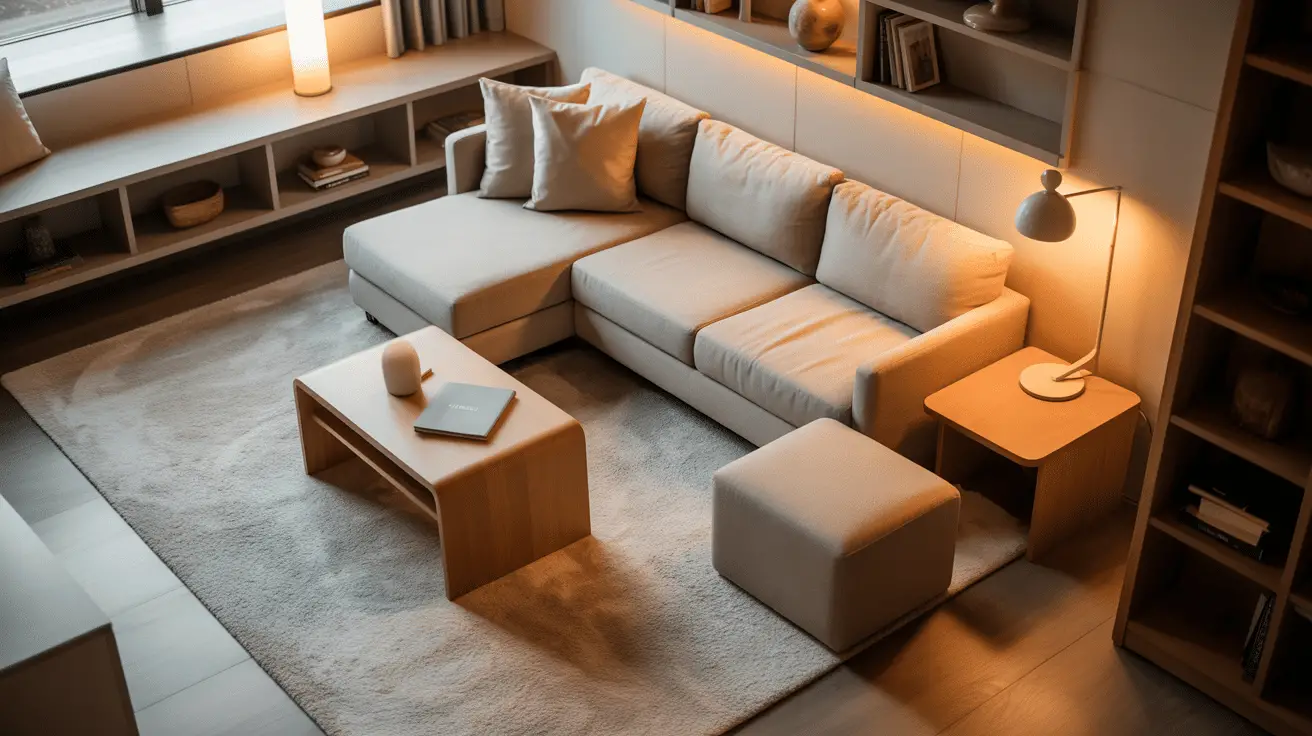
Small-scale furniture can make a significant difference. Opt for compact loveseats or modular seating that fits tightly against walls without protruding. When placing these pieces, using a corner-based layout helps open the center of the room, making the space feel more breathable. Floating furniture away from the walls isn’t always possible in dorms, so maximizing perimeter placement is often the most effective approach.
Another helpful strategy is creating “zones” within the living space. Even in a single room, defining a lounge area, a small workspace, or a snack corner using rugs, lighting, or shelving can instantly make the layout feel purposeful. This zoning effect keeps the room visually organized, even with limited square footage.
Furniture Placement Breakdown
| Layout Strategy | Best Use | Benefits |
| Corner seating | Small dorms | Opens central floor area |
| Wall-hugging pieces | Narrow rooms | Maximizes flow pathways |
| Defined zones | Shared dorms | Keeps areas separated + tidy |
| Window-facing desk | Natural-light areas | Increases productivity |
Using Multifunctional Furniture to Save Space
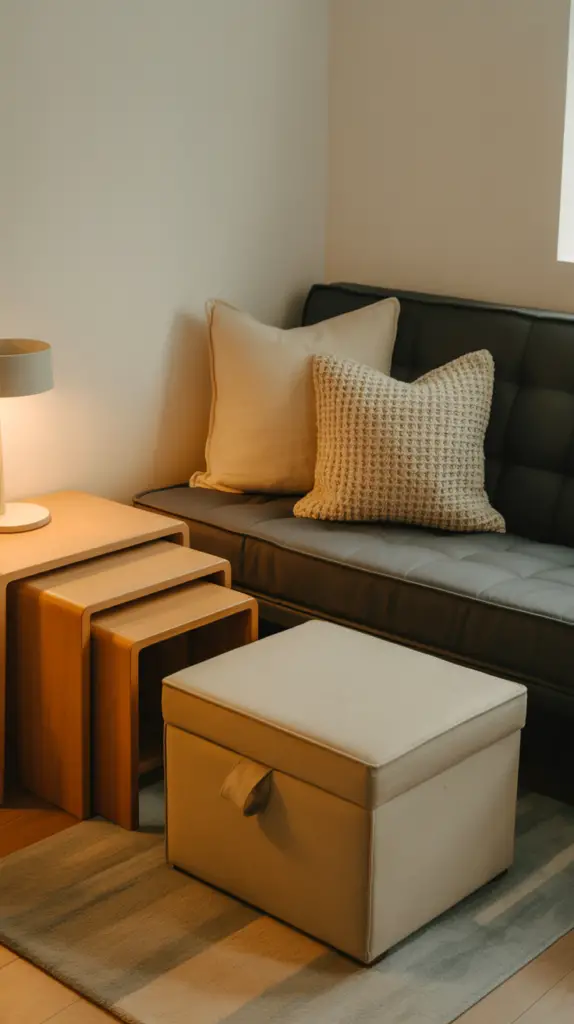
Multifunctional furniture is essential when designing dorm living room layout ideas for small spaces. With strict size limitations, every piece must offer value beyond its primary purpose. Futons, ottomans, and nesting tables are especially useful in dorm settings, improving both seating and storage while maintaining a clean aesthetic.
A futon, for example, acts as a sofa during the day and an extra sleeping space when needed—a valuable addition for guests or roommates. Ottomans with lids create accessible storage for blankets, textbooks, or snacks, reducing visible clutter. Nesting tables slide neatly together when not in use and can be pulled apart for study sessions or group activities.
Another often-underestimated option is a foldable accent chair. These chairs provide additional seating without taking up permanent space. When not in use, they slide under lofted beds or into small closets. Floating wall desks or fold-down wall shelves can replace bulky tables while offering a flexible workspace that doesn’t obstruct walking paths.
Multifunctional Furniture Table
| Furniture Piece | Function 1 | Function 2 |
| Futon | Seating | Guest bed |
| Storage ottoman | Footrest | Hidden storage |
| Nesting tables | Coffee table | Extra surfaces |
| Foldable chair | Seating | Space-saving storage |
Creating a Functional Layout for Shared Dorm Living Rooms
Shared dorms place extra importance on thoughtful layouts, because more people means more items, more traffic, and more activities happening in the same compact space. A successful layout ensures that everyone has access to a comfortable seat, clear movement paths, and a personal sense of ownership over the shared area.
Start by establishing a communal seating zone. A loveseat paired with ottomans creates flexible seating that can expand during movie nights or fold away when you need more floor space. Placing this arrangement against the longest wall typically maximizes usable room depth.
Next, incorporate shared-access storage. Cube shelves, low dressers, or compact bookcases can serve as both décor and organizational hubs. When placed along entry paths or beneath lofted beds, these pieces reduce clutter while maintaining accessibility. Clearly labeling storage or assigning cubbies helps preserve harmony among roommates.
Lighting plays a significant role as well. Instead of relying solely on harsh overhead lights, incorporate warm floor lamps or clip-on lights to create cozy ambiance. This allows roommates to use the space for different purposes simultaneously—studying in one corner and relaxing in another.
Shared Space Layout Table
| Shared Feature | Placement Tip | Benefit |
| Communal seating | Longest wall | Maximizes layout balance |
| Shared storage | Entryway or corner | Reduces clutter |
| Task lighting | Desk + sofa areas | Supports multi-use space |
| Ottomans | Near seating | Flexible expansion |
Designing Layouts that Double as Study Spaces
In dorms, the living room often doubles as a study zone, making layout efficiency even more important. Students need a space that supports productivity without sacrificing comfort. This can be achieved with subtle adjustments that blend work and relaxation within the same square footage.
A small corner desk is often ideal, especially when placed near a window or wall outlet. If floor space is limited, consider a floating shelf desk paired with a compact chair that slides neatly underneath. Placing the study zone away from the main seating area minimizes distractions, allowing the brain to associate each side of the room with different activities.
Storage is critical in a study-friendly layout. Using vertical shelving or pegboards removes clutter from the desk and gives textbooks, stationery, and devices a home that doesn’t intrude on the living area. Incorporating soft lighting—such as a warm desk lamp—creates an inviting study environment while maintaining the cozy dorm aesthetic.
Study Layout Table
| Study Element | Ideal Placement | Purpose |
| Desk | Corner or near window | Focus + natural light |
| Vertical storage | Above desk | Saves floor space |
| Desk lamp | On workspace | Reduces eye strain |
| Rolling cart | Beside desk | Extra organization |
Enhancing Small Dorm Living Rooms with Smart Storage Solutions
Storage is one of the biggest challenges in dorm living room layouts for small spaces. The key is keeping items accessible while preventing clutter from overwhelming the room. Hidden storage is especially useful—pieces like ottomans, storage benches, or under-bed bins allow you to stow away essentials without sacrificing style.
Vertical storage also plays an important role. Using tall shelves, over-the-door organizers, or wall-mounted hooks frees valuable floor space. These solutions offer visual neatness and help categorize frequently used items. For example, a shared snack shelf keeps food visible without littering surfaces, while a media basket near the futon organizes remotes, chargers, and small electronics.
Storage should feel intentional, not improvised. Matching baskets or bins instantly elevate the aesthetic while creating uniformity. Opting for neutral tones or materials like woven fibers softens the visual impact and keeps the dorm feeling warm and inviting.
Storage Solution Table
| Storage Type | Best Use | Benefit |
| Storage ottoman | Blankets + books | Hidden + stylish |
| Wall hooks | Bags + jackets | Saves floor space |
| Cube shelving | Shared items | Customizable |
| Under-bed bins | Seasonal or bulky items | Maximizes unused space |
Decorating Small Dorm Living Rooms Without Overcrowding the Layout
Decorating small dorm living rooms requires a thoughtful balance between personality and practicality. Over-decorating can make the room feel cramped, while too little décor leaves it looking bland and impersonal. A strategic middle ground creates a visually pleasing, cozy atmosphere without disrupting the layout.
Rugs are a powerful tool for defining the dorm’s living room area. A medium-sized rug not only adds warmth and style but also visually segments the seating zone from the study or sleeping areas. Throw pillows, blankets, and fabric textures soften the space while allowing you to layer colors without overwhelming the eye.
Wall décor should be lightweight and easy to hang. Removable wallpaper, photo grids, tapestries, or peel-and-stick art create big visual impact without the permanence of traditional décor. Mirrors are another excellent addition—they reflect light and create the illusion of a more spacious room.
Choose décor pieces that serve a purpose. For instance, a decorative tray can be both a style accent and a surface for organizing remote controls or snacks. A stylish lamp upgrades the décor while improving lighting quality.
Décor Strategy Table
| Décor Item | Practical Benefit | Aesthetic Effect |
| Rug | Defines layout zone | Adds color + warmth |
| Mirrors | Expands sense of space | Brightens the room |
| Peel-and-stick art | Easy + damage-free | Adds personality |
| Throw pillows | Soft comfort | Visual layering |
Conclusion
Designing a functional and stylish dorm living room layout for small spaces requires intention, creativity, and smart use of space. With thoughtful furniture placement, multifunctional pieces, organized storage, and décor that enhances rather than clutters, even the smallest dorm can feel welcoming and spacious. By defining zones, incorporating study-friendly elements, and personalizing the room with purposeful decorations, students can create an environment that supports both daily routines and relaxation. A well-planned layout transforms the limitations of dorm living into an opportunity for comfort, expression, and efficiency.